Joanna Wiśniewska
Marketing and PR Manager j.wisniewska@avallon.pl
Hagen PR
Wojciech Dziewit
wojtek@hagen.pl
One of the transactions of the Avallon MBO Fund III portfolio was the purchase of Globema. Globema is an innovative company specialising in geospatial software and IT solutions for network and telecommunications companies. Its business model is based, inter alia, on a strategic partnership with Google in the area of this US giant’s mapping services , as well as on a close and multi‑track cooperation with GE. Globema’s services are available in over than 50 countries.
Ryszard Rybus, Globema’s CEO talks, inter alia, about what the MBO transaction completed jointly with Avallon looked like and then what has changed in the company since it took place. An interesting aspect discussed in this interview concerns the challenges posed by many years of close cooperation with such major global players as Google and GE. The CEO, Ryszard Rybus, also discusses the company’s plans for the nearest future and its chosen directions for further development – the focus on foreign expansion is going to be even more important, also in the area of implementation the company’s own services and products. Besides, the company has bold acquisition plans – it is already intensively looking for interesting IT entities that could help to strengthen its market position.
From a few months’ perspective now, how do you evaluate the MBO transaction carried out together with Avallon?
We were supported throughout the entire investor selection process by a trusted advisor – the existing four owners decided to sell their shares with the support of financial and legal advisors. Avallon was among over a hundred of potentially considered entities and went through that whole lengthy procedure. After a few more meetings, we identified a number of the best offers and finally selected Avallon. We signed a preliminary agreement so that the due diligence process could begin, followed by the final negotiation of terms and closing the deal. This was followed by a strategy meeting to clarify new developments, including M&A (we are already looking around for potential companies – acquisition candidates).
The process was rather time‑consuming and comprehensive. We had the opportunity to learn a lot as a company, but I personally was able to learn a lot as well. We had a chance to experience a different perspective on many things – for example, certain legal or tax issues. It was necessary to change our approach to management and to concentrate more on the future. In fact, from the very beginning, from the moment of establishing the first direct contact between us and the fund, I have evaluated our relationship very positively, and this translated into a smooth implementation of the next stages of the process and the implementation of new solutions. In the end, we were successful – both parties achieved their goals and we are very satisfied with it. From my perspective, I can say that we took a great decision.
What has changed in the company since Avallon came on board? What recruitment, personnel changes, new directions have taken place?
We are only at the start of this journey. After the transaction, the company have had to get back into the business stronger and with energy to grow. We are facing new, more challenging requirements, e.g. in the area of controlling or financial reporting.
Which markets are Globema’s services already available on? What new expansion directions are being considered?
Our products are present in more than 50 countries. This mainly concerns our solutions in the telecommunications area. For more than 20 years, we have been selling modules for the Small‑world application of the global American giant of the GES market in the telecom&utilities of GE. It is a software product that allows us to build mapped, specialised platforms for network modelling in all network industries – energy power, heat, gas, water and sewage networks. The platform is owned by GE, while we build our solutions on its basis to then offer them to customers. At the same time, our cooperation with GE also works the other way round – GE is a distributor of our products. That’s the reason for such significant Globema’s presence in the whole world.
There is a little different situation with implementation services – these are demanding and complex processes based on appropriate customisation for the needs of a specific customer. In this area, we offer complex implementations. Direct product sales are based on our branches on the CEE market – in the Czech Republic, Romania and Serbia. These foreign branches facilitate our presence on these markets, but not only there – we also try to operate in neighbouring countries. For example, our Romanian branch simultaneously sells services both in Moldova and Italy.
We also focus strongly on our US subsidiary. The company has been operating for over 10 years now, but for most of this time it has been an intermediary for our services on the US market. For some time now, however, we have been developing this direction more strongly – not only in the USA, but also in Canada. From there, we also operate in South American countries.
Directly from Poland, we operate in Western European markets, where we have local partners, e.g. in Denmark, but also in APAC (Asia & Pacific, including Australia and New Zealand) markets.
What does the collaboration with giants such as GE or Google look like and what is gained by it?
Globema was founded 25 years ago and from the very beginning the core of its business was the Small‑word platform, which had been developed by the British company of the same name. After that acquisition, the partnership with Globema was continued. It was slightly different with Google – it was them who came out to us with the initiative to cooperate. Over ten years ago this corporation decided to build a partner network in Poland and chose two local companies to cooperate with in selling maps for business. While the latter company did not ultimately develop this partnership, we became heavily involved in this cooperation and to this day, the sale of Google geoproducts is an important part of our business.
Cooperation between a medium‑sized company like Globema and such giants is not easy. The main difficulty is related to the fact that in the case of such global giants, business models and conditions for partners change quite often (mainly on the Google side), e.g. regarding reseller margins. On the other hand, the decision to tie up with GE has helped us to embark on a unique growth path – to build on reputable products, enter into a relationship with industry leaders and begin to expand overseas.
To us, such cooperation brings real benefits, but at the same time both companies appreciate Globema’s competence. There are perhaps a few dozen companies like ours scattered around the world. Globema is, however, one of GE’s few leading partners. Google also appreciates us – even though it has a strong presence in Poland, e.g. it has its data centres here, mapping competences are in Globema, and whoever approaches the Polish branch of Google – in fact they come to us.
Has the company gained any new well‑known clients (such as Bolt or Vodaphone)?
Our customers are large companies from many different network industries – also insurers, banks, telecoms, etc. Bolt and Vodaphone – unlike GE and Google – are our customers, but not partners. Bolt is currently our biggest customer as far as turnover is concerned because this company needs a very large number of different types of map services. However, we are acquiring new customers all the time – especially through our branch in the USA. In October, as Globema US, we signed a contract with a large Canadian telecommunications company which also operates in the USA. We sold one of our modules to the American company Lumen, which purchased 1,000 licences from us; while a leading telecom operator from Australia bought the first batch of our modules in a subscription model.
Our most recent success is a special pilot programme implemented together with Google – we have already managed to sign several contracts for the implementation of new Google products – iTaxi is our first customer of this programme, and the second is the Estonian company Forus (formerly TaxiGo).
What are you focusing on in your current R&D activities?
As part of our R&D activities, we have carried out several projects with European Union support. The first had taken place even before we joined the European Union, as part of a consortium of several companies. In addition to EU‑funded projects, we also carry out our own investments – for example, the telecommunications products mentioned above were developed as part of our own investments. An interesting subsidised project is the Lobster system. It is used to support power companies in balancing electricity transmission. As a result of an unfavourable government decision, the conditions for connecting new renewable energy producers to the grid have changed. The Polish grid is unprepared for the transmission of energy in two directions, and such balancing is one solution to this problem. In microgrids this energy can be balanced and the same applies to energy distributors. We will certainly continue to invest in our own solutions, especially in the area of telecommunications, because there is a lot of demand here.
What do the GIS and LBS markets look like at the moment? How are they affected by the current geopolitical situation?
The current geopolitical turmoil has had a direct impact on our business – we were present in the Ukrainian market, in the heating sector. Kiev was implementing our district heating application in Smallworld, but so was Lviv and several other Ukrainian cities. Unfortunately for us, this business – at least for the time being – came to a halt on 24 February. The digital form of network management is also, or perhaps especially now, crucial. It is much easier to manage it digitally. Here, as far as network digitalisation is concerned, the driver of much of the acceleration was the pandemic situation. However, we still see a lot of room for more growth for us, especially among network and telecom companies. The digital network model is key to the efficiency of these entities. In energy, to modernise the grid, you need to have it well mapped. This is where we come into the area of smart grid – enabling digital management of networks, which we also offer. The smart grid market will grow dynamically in the near future.
At the moment we can see the importance of geo‑localisation technology. It is essential to have an accurate knowledge of critical infrastructure. If we want to protect it, we need to know where it is. Of course, some unexpected situation might always happen which might completely change the market status, but Globema’s business is diversified in terms of products and territories, which makes us immune to any type of turbulence.
What are the company’s plans for the future – in the short and long term?
First of all, the further development of overseas branches, especially the USA – because this is a key and a very large market for us. Secondly, we are focusing on the development of our own specialised products. We want to enter more dynamically in terms of tools and services the area of acquiring and maintaining network data for telecommunication and network companies. Any system is useless without proper data. The digitalisation of this information is a challenge, and we are providing tools with which network companies are capable of acquiring such data from various sources.
Thanks to working with Avallon, we now realize we can direct our company to a path of growth through acquisitions of other technology companies and thus strengthen the Globema group. We are already working intensively on attracting potential candidates.
One of the transactions of the Avallon MBO Fund III portfolio was the purchase of Globema. Globema is an innovative company specialising in geospatial software and IT solutions for network and telecommunications companies. Its business model is based, inter alia, on a strategic partnership with Google in the area of this US giant’s mapping services , as well as on a close and multi‑track cooperation with GE. Globema’s services are available in over than 50 countries.
Ryszard Rybus, Globema’s CEO talks, inter alia, about what the MBO transaction completed jointly with Avallon looked like and then what has changed in the company since it took place. An interesting aspect discussed in this interview concerns the challenges posed by many years of close cooperation with such major global players as Google and GE. The CEO, Ryszard Rybus, also discusses the company’s plans for the nearest future and its chosen directions for further development – the focus on foreign expansion is going to be even more important, also in the area of implementation the company’s own services and products. Besides, the company has bold acquisition plans – it is already intensively looking for interesting IT entities that could help to strengthen its market position.
From a few months’ perspective now, how do you evaluate the MBO transaction carried out together with Avallon?
We were supported throughout the entire investor selection process by a trusted advisor – the existing four owners decided to sell their shares with the support of financial and legal advisors. Avallon was among over a hundred of potentially considered entities and went through that whole lengthy procedure. After a few more meetings, we identified a number of the best offers and finally selected Avallon. We signed a preliminary agreement so that the due diligence process could begin, followed by the final negotiation of terms and closing the deal. This was followed by a strategy meeting to clarify new developments, including M&A (we are already looking around for potential companies – acquisition candidates).
The process was rather time‑consuming and comprehensive. We had the opportunity to learn a lot as a company, but I personally was able to learn a lot as well. We had a chance to experience a different perspective on many things – for example, certain legal or tax issues. It was necessary to change our approach to management and to concentrate more on the future. In fact, from the very beginning, from the moment of establishing the first direct contact between us and the fund, I have evaluated our relationship very positively, and this translated into a smooth implementation of the next stages of the process and the implementation of new solutions. In the end, we were successful – both parties achieved their goals and we are very satisfied with it. From my perspective, I can say that we took a great decision.
What has changed in the company since Avallon came on board? What recruitment, personnel changes, new directions have taken place?
We are only at the start of this journey. After the transaction, the company have had to get back into the business stronger and with energy to grow. We are facing new, more challenging requirements, e.g. in the area of controlling or financial reporting.
Which markets are Globema’s services already available on? What new expansion directions are being considered?
Our products are present in more than 50 countries. This mainly concerns our solutions in the telecommunications area. For more than 20 years, we have been selling modules for the Small‑world application of the global American giant of the GES market in the telecom&utilities of GE. It is a software product that allows us to build mapped, specialised platforms for network modelling in all network industries – energy power, heat, gas, water and sewage networks. The platform is owned by GE, while we build our solutions on its basis to then offer them to customers. At the same time, our cooperation with GE also works the other way round – GE is a distributor of our products. That’s the reason for such significant Globema’s presence in the whole world.
There is a little different situation with implementation services – these are demanding and complex processes based on appropriate customisation for the needs of a specific customer. In this area, we offer complex implementations. Direct product sales are based on our branches on the CEE market – in the Czech Republic, Romania and Serbia. These foreign branches facilitate our presence on these markets, but not only there – we also try to operate in neighbouring countries. For example, our Romanian branch simultaneously sells services both in Moldova and Italy.
We also focus strongly on our US subsidiary. The company has been operating for over 10 years now, but for most of this time it has been an intermediary for our services on the US market. For some time now, however, we have been developing this direction more strongly – not only in the USA, but also in Canada. From there, we also operate in South American countries.
Directly from Poland, we operate in Western European markets, where we have local partners, e.g. in Denmark, but also in APAC (Asia & Pacific, including Australia and New Zealand) markets.
What does the collaboration with giants such as GE or Google look like and what is gained by it?
Globema was founded 25 years ago and from the very beginning the core of its business was the Small‑word platform, which had been developed by the British company of the same name. After that acquisition, the partnership with Globema was continued. It was slightly different with Google – it was them who came out to us with the initiative to cooperate. Over ten years ago this corporation decided to build a partner network in Poland and chose two local companies to cooperate with in selling maps for business. While the latter company did not ultimately develop this partnership, we became heavily involved in this cooperation and to this day, the sale of Google geoproducts is an important part of our business.
Cooperation between a medium‑sized company like Globema and such giants is not easy. The main difficulty is related to the fact that in the case of such global giants, business models and conditions for partners change quite often (mainly on the Google side), e.g. regarding reseller margins. On the other hand, the decision to tie up with GE has helped us to embark on a unique growth path – to build on reputable products, enter into a relationship with industry leaders and begin to expand overseas.
To us, such cooperation brings real benefits, but at the same time both companies appreciate Globema’s competence. There are perhaps a few dozen companies like ours scattered around the world. Globema is, however, one of GE’s few leading partners. Google also appreciates us – even though it has a strong presence in Poland, e.g. it has its data centres here, mapping competences are in Globema, and whoever approaches the Polish branch of Google – in fact they come to us.
Has the company gained any new well‑known clients (such as Bolt or Vodaphone)?
Our customers are large companies from many different network industries – also insurers, banks, telecoms, etc. Bolt and Vodaphone – unlike GE and Google – are our customers, but not partners. Bolt is currently our biggest customer as far as turnover is concerned because this company needs a very large number of different types of map services. However, we are acquiring new customers all the time – especially through our branch in the USA. In October, as Globema US, we signed a contract with a large Canadian telecommunications company which also operates in the USA. We sold one of our modules to the American company Lumen, which purchased 1,000 licences from us; while a leading telecom operator from Australia bought the first batch of our modules in a subscription model.
Our most recent success is a special pilot programme implemented together with Google – we have already managed to sign several contracts for the implementation of new Google products – iTaxi is our first customer of this programme, and the second is the Estonian company Forus (formerly TaxiGo).
What are you focusing on in your current R&D activities?
As part of our R&D activities, we have carried out several projects with European Union support. The first had taken place even before we joined the European Union, as part of a consortium of several companies. In addition to EU‑funded projects, we also carry out our own investments – for example, the telecommunications products mentioned above were developed as part of our own investments. An interesting subsidised project is the Lobster system. It is used to support power companies in balancing electricity transmission. As a result of an unfavourable government decision, the conditions for connecting new renewable energy producers to the grid have changed. The Polish grid is unprepared for the transmission of energy in two directions, and such balancing is one solution to this problem. In microgrids this energy can be balanced and the same applies to energy distributors. We will certainly continue to invest in our own solutions, especially in the area of telecommunications, because there is a lot of demand here.
What do the GIS and LBS markets look like at the moment? How are they affected by the current geopolitical situation?
The current geopolitical turmoil has had a direct impact on our business – we were present in the Ukrainian market, in the heating sector. Kiev was implementing our district heating application in Smallworld, but so was Lviv and several other Ukrainian cities. Unfortunately for us, this business – at least for the time being – came to a halt on 24 February. The digital form of network management is also, or perhaps especially now, crucial. It is much easier to manage it digitally. Here, as far as network digitalisation is concerned, the driver of much of the acceleration was the pandemic situation. However, we still see a lot of room for more growth for us, especially among network and telecom companies. The digital network model is key to the efficiency of these entities. In energy, to modernise the grid, you need to have it well mapped. This is where we come into the area of smart grid – enabling digital management of networks, which we also offer. The smart grid market will grow dynamically in the near future.
At the moment we can see the importance of geo‑localisation technology. It is essential to have an accurate knowledge of critical infrastructure. If we want to protect it, we need to know where it is. Of course, some unexpected situation might always happen which might completely change the market status, but Globema’s business is diversified in terms of products and territories, which makes us immune to any type of turbulence.
What are the company’s plans for the future – in the short and long term?
First of all, the further development of overseas branches, especially the USA – because this is a key and a very large market for us. Secondly, we are focusing on the development of our own specialised products. We want to enter more dynamically in terms of tools and services the area of acquiring and maintaining network data for telecommunication and network companies. Any system is useless without proper data. The digitalisation of this information is a challenge, and we are providing tools with which network companies are capable of acquiring such data from various sources.
Thanks to working with Avallon, we now realize we can direct our company to a path of growth through acquisitions of other technology companies and thus strengthen the Globema group. We are already working intensively on attracting potential candidates.
-
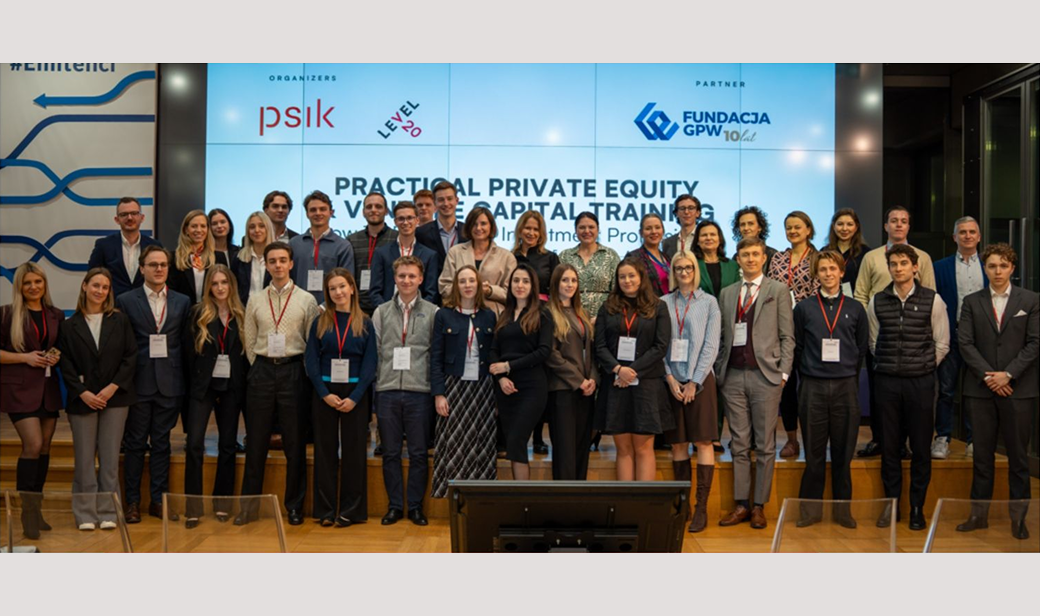
1.04.2026 READ MOREAvallon MBO Supports the Development of Young Talent in PE/VCAvallon MBO supported the 4th edition of the Practical Private Equity & Venture Capital Course, co-organized by the Polish Private Equity & Venture Capital Association (PSIK) and Level 20. This year’s edition was partnered by the Warsaw Stock Exchange Foundation.
The course is a unique educational initiative aimed at students, providing access to practical knowledge about the private equity and venture capital market through a series of workshops led by experienced fund managers.
As part of the program, Agnieszka Pakulska and Marcin Konarski represented Avallon MBO, sharing their experience in investment project analysis, cooperation with management teams, and building company value during the investment process.
An important element of this year’s edition was also the involvement of Level 20 – an initiative supporting the development of women in the private equity industry, co-founded by Agnieszka Pakulska.
From Avallon MBO’s perspective, the opportunity for direct interaction with course participants and observing the high level of engagement and interest in the PE/VC market among the younger generation was particularly valuable. Participation in the program provides students with a meaningful opportunity to gain practical knowledge and better understand the specifics of the private equity and venture capital market.
-
10.03.2026 READ MOREAvallon Employees’ Kids on the Pitch – Supporting the Widzew AcademyDuring the match between Widzew Łódź and Lech Poznań, the children of Avallon employees and their friends took part in a special pre-match ceremony, escorting the players of both teams onto the pitch.
Before the first whistle, the youngest participants, together with girls from the Widzew Academy, stepped onto the field alongside the players, accompanying them during their entrance to the stadium. For the children, it was a truly special moment and an unforgettable experience that will surely stay with them for a long time.
The match delivered plenty of sporting excitement for the fans and ended with a 2:1 victory for Widzew Łódź over Lech Poznań.
We are proud to support the development of young athletes as a partner of the Widzew Academy and to create opportunities for such memorable football moments.
Congratulations to the Widzew team on a great result, and thank you for the opportunity to be part of this special event. -

3.03.2026 READ MOREAgnieszka Pakulska Named Among Forbes Women Poland’s 25 Top InvestorsWe are proud to announce that Agnieszka Pakulska, Partner at Avallon MBO, has been recognized in the prestigious Forbes Women Poland 25 Top Investors list.
Agnieszka is the author of key transactions and co-creator of projects that consistently enhance the value of portfolio companies. She combines investment discipline with a long-term approach to developing businesses and teams, while actively promoting the presence of women in private equity, including as a co-founder of the Level20 initiative.
At Avallon MBO, diversity and professionalism are integral to our teams. We believe that teams combining different experiences make better decisions and create lasting value.
Congratulations to Agnieszka and all the distinguished investors!
https://www.forbes.pl/forbeswomen/lista-forbes-women-25-top-inwestorek/2fs54v0 -
24.02.2026 READ MOREPolmlek Acquires Kampol-Fruit. A Sensible Move in a Demanding SegmentTomasz Stamirowski, Managing Partner at Avallon MBO, was asked by the editors of PortalSpozywczy.pl to provide expert commentary on Polmlek’s acquisition of the fruit and vegetable processing plants of Kampol-Fruit in Milejów.
In his analysis, he indicates that the transaction should be viewed as a rational strengthening of the group rather than a strategic breakthrough in the frozen foods segment. The scale of the acquisition remains small relative to Polmlek’s overall operations – Kampol’s sales accounted for approximately 1% of the group’s revenues, which exceeded PLN 5.3 billion in 2024. The Polish fruit and vegetable frozen foods market itself, valued at around PLN 1 billion, is highly competitive and dominated by several large players.
According to Tomasz Stamirowski, the key aspect of the transaction is the strengthening of the juice segment and the Fortuna brand, as well as the attractive acquisition of modern assets purchased at a discount through bankruptcy proceedings. The potential to leverage Polmlek’s experience in working with farmers and contracting raw materials in the fruit and vegetable segment may also prove significant.
If the integration process proves successful, the acquisition could represent the first step toward broader involvement by Polmlek in fruit and vegetable processing – a sector whose potential, including export opportunities, remains largely untapped.
We encourage you to read the full commentary:
Expert Assesses Polmlek’s Latest Acquisition: “A Sensible Strengthening of the Group.” -
20.02.2026 READ MORECompany growth can be measured by revenue and margin expansion. It can also be measured by the real impact a business has on its surroundingsOur portfolio company MPPK – a distributor of premium pet food brands for dogs and cats, Wiejska Zagroda and Pan Mięsko – has been building a strong position in the pet food segment for years. At the same time, it is doing something equally important: consistently supporting animal welfare.
Together with Joanna Krupa, her friends, and Media Expert (Terg), the MPPK team visited places where every form of support truly matters:3 shelters,
6 tons of pet food,
1 shared idea – to help in a smart and responsible way.This was not a one-off PR initiative, but part of a broader, long-term approach – from ongoing cooperation with shelters and support for adoptions to educational activities promoting responsible pet ownership.
MPPK demonstrates that the pet food industry can set standards – both in quality and in ethics. Business scale and sensitivity do not have to be mutually exclusive. On the contrary, together they create lasting value.


